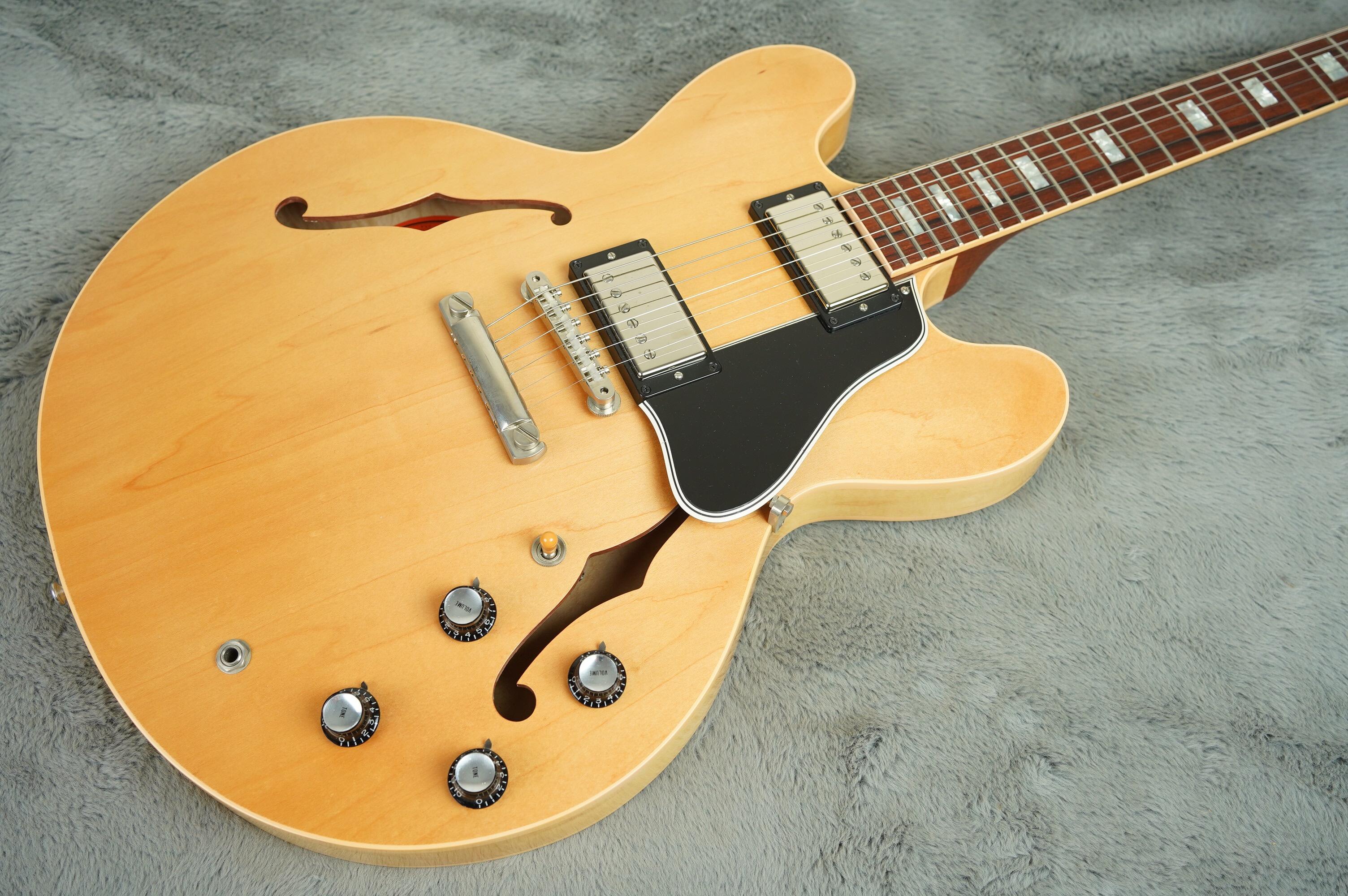
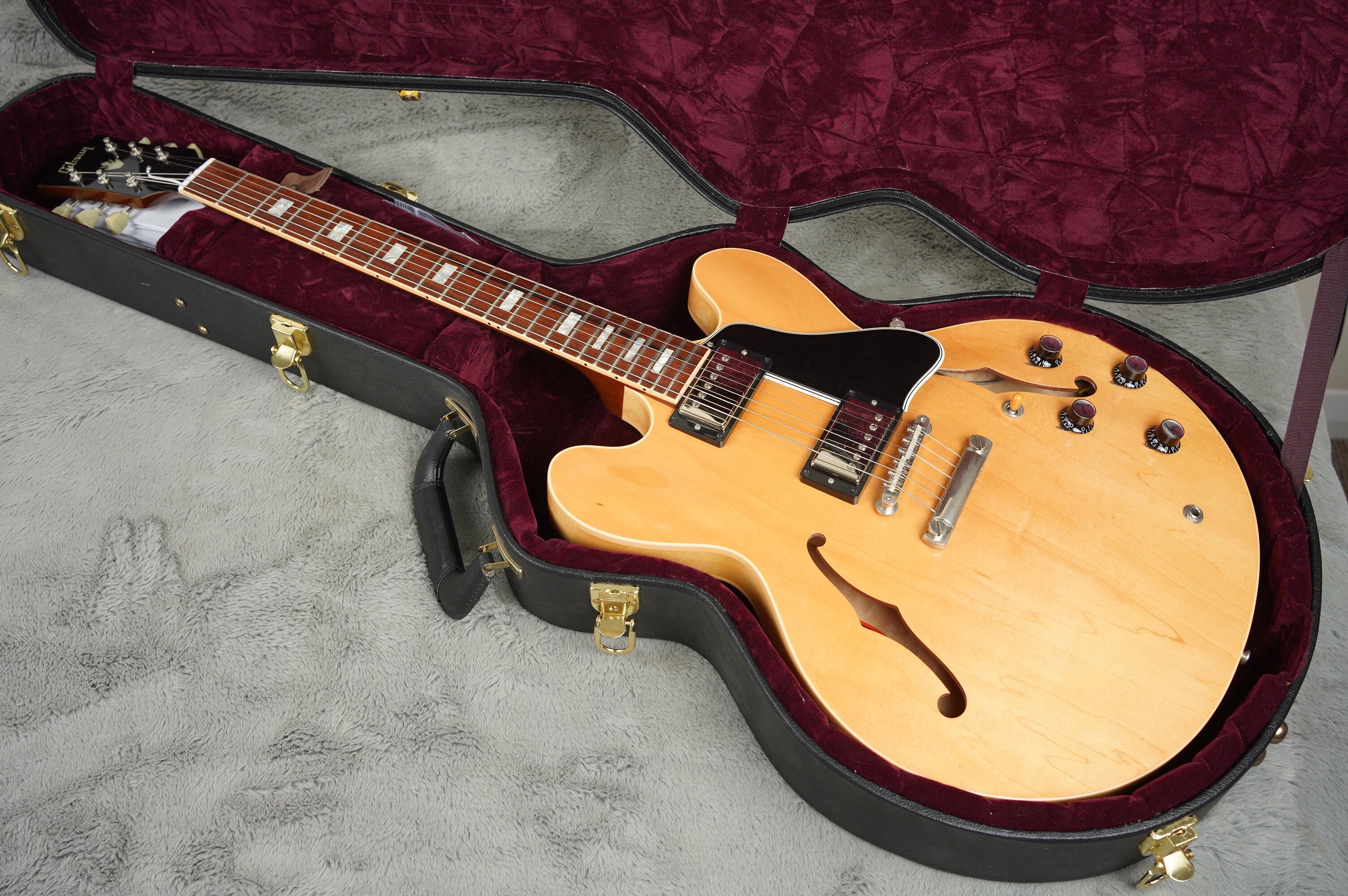
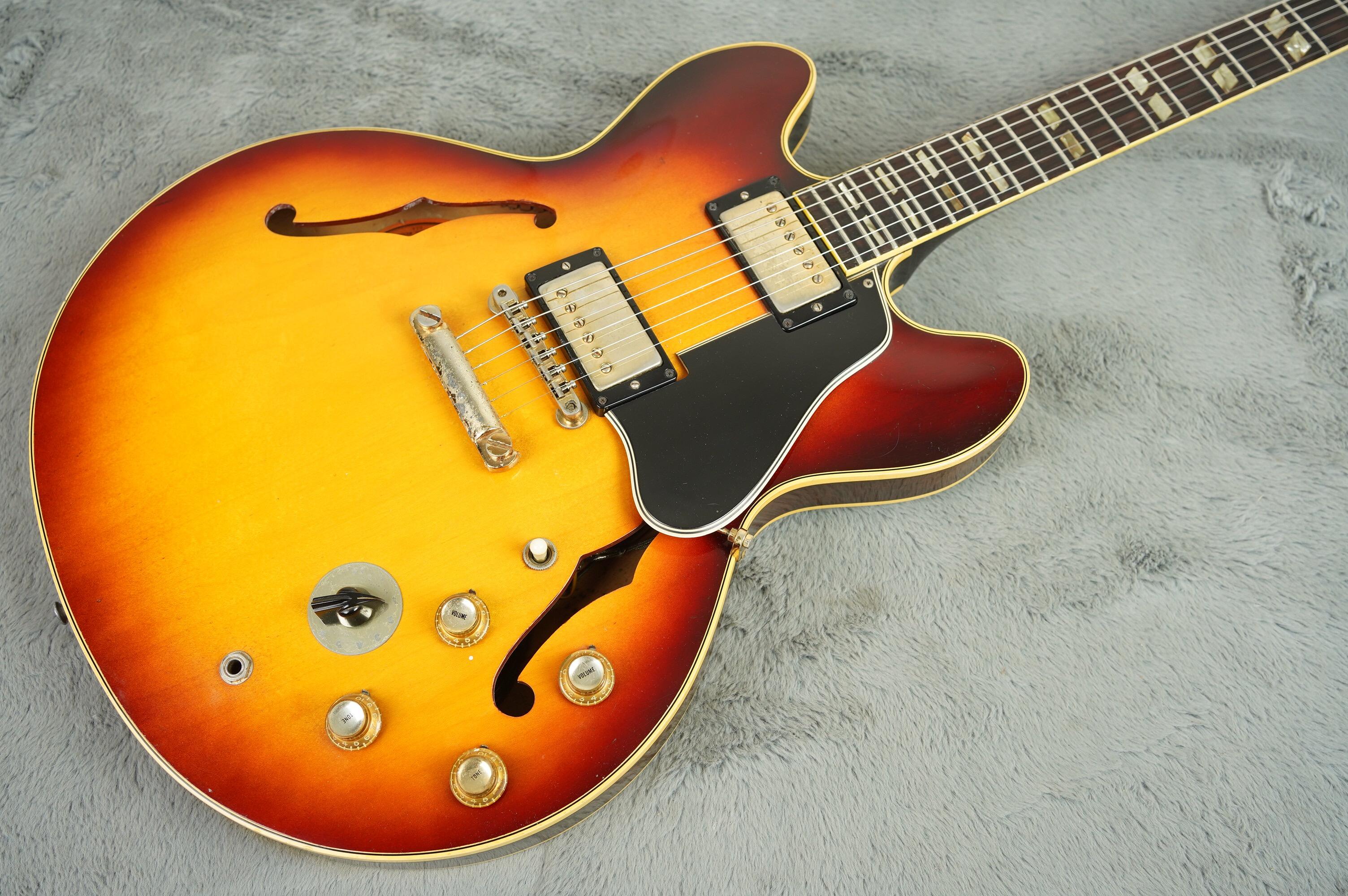
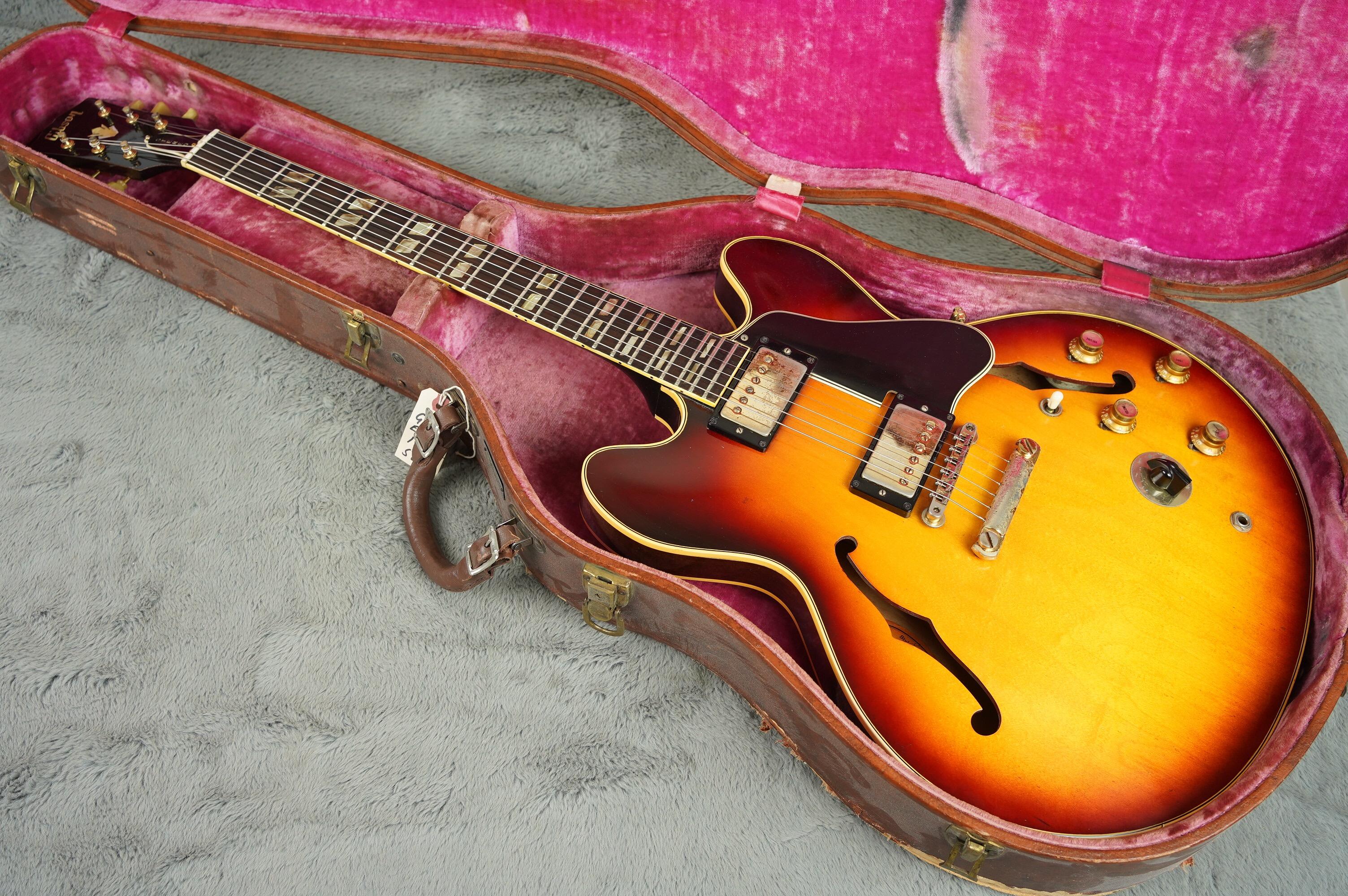
1964 Gibson Firebird I, Sunburst
This 1964 Gibson Firebird I is one of the rarest and most striking guitars of the original Firebird series, representing Gibson’s boldest design experiment of the early 1960s. Conceived as a starkly minimalist instrument, the Firebird I was issued with just a single bridge pickup and no vibrato. Sadly the model didn't sell in the numbers Gibson had hoped and the model was discontinued in 1965, replaced by the non-reverse Firebird at a cheaper price point. As a result the Firebird I stands as one of the scarcest of all original “reverse” Firebirds.
Introduced in late 1963 and discontinued shortly after the 1965 NAMM show, the original Firebird range had a remarkably short production life. Its futuristic body shape, neck-through construction and reversed headstock were unlike anything Gibson had produced before. While the design is now widely regarded as a classic, it proved complex and expensive to manufacture, particularly in the context of the Firebird I’s original price point. In 1964, a Firebird I listed at $215, with an additional $46 for the large hard case, placing it well above guitars like the SG Junior and ultimately limiting its appeal to younger players.
The Firebird I is defined by its uncluttered layout and elegant restraint. This example retains the core features that make the model so distinctive: the long laminated mahogany neck-through body with wings attached at the sides, the fluid offset shape with its elongated lower horn, and the unbound rosewood fingerboard with dot inlays. The neck is a comfortable rounded C profile that feels substantial without being unwieldy, and is topped by the iconic reverse headstock fitted with individual banjo tuners.
Electronics are deliberately simple, centred around a single Pat No. Firebird pickup in the bridge position. Measuring 6.15k, it delivers a cutting, focused voice with plenty of bite and clarity with that raw snarling Firebird character. Control cavity components include correct CTS pots dating to 1963 and the correct Sprague capacitor. All hardware follows the original nickel-plated specification, with a repro compensating bridge/tailpiece currently fitted for practicality, and the original bridge included in the case alongside the original pickguard.
As is often the case with early Firebirds, this guitar has suffered a break and repair at the headstock, an area well known for vulnerability on the model due to the angled headstock and protruding banjo tuners. The repair has been done well, it's been oversprayed and is stable. The large frets appear original as does the nut.
With only around 500 reverse Firebird I guitars shipped in 1964, and fewer than 1,000 produced in total before the model was reworked, surviving examples are increasingly scarce. The Firebird I also carries notable artist associations, most famously Eric Clapton during the latter days of Cream, as well as Steven Stills in the 1970s.
These rarely come up, especially in the UK. This is a fantastic example with original orange lined rectangular case.
Original: $17,119.00
-65%$17,119.00
$5,991.65Product Information
Product Information
Shipping & Returns
Shipping & Returns
Description
This 1964 Gibson Firebird I is one of the rarest and most striking guitars of the original Firebird series, representing Gibson’s boldest design experiment of the early 1960s. Conceived as a starkly minimalist instrument, the Firebird I was issued with just a single bridge pickup and no vibrato. Sadly the model didn't sell in the numbers Gibson had hoped and the model was discontinued in 1965, replaced by the non-reverse Firebird at a cheaper price point. As a result the Firebird I stands as one of the scarcest of all original “reverse” Firebirds.
Introduced in late 1963 and discontinued shortly after the 1965 NAMM show, the original Firebird range had a remarkably short production life. Its futuristic body shape, neck-through construction and reversed headstock were unlike anything Gibson had produced before. While the design is now widely regarded as a classic, it proved complex and expensive to manufacture, particularly in the context of the Firebird I’s original price point. In 1964, a Firebird I listed at $215, with an additional $46 for the large hard case, placing it well above guitars like the SG Junior and ultimately limiting its appeal to younger players.
The Firebird I is defined by its uncluttered layout and elegant restraint. This example retains the core features that make the model so distinctive: the long laminated mahogany neck-through body with wings attached at the sides, the fluid offset shape with its elongated lower horn, and the unbound rosewood fingerboard with dot inlays. The neck is a comfortable rounded C profile that feels substantial without being unwieldy, and is topped by the iconic reverse headstock fitted with individual banjo tuners.
Electronics are deliberately simple, centred around a single Pat No. Firebird pickup in the bridge position. Measuring 6.15k, it delivers a cutting, focused voice with plenty of bite and clarity with that raw snarling Firebird character. Control cavity components include correct CTS pots dating to 1963 and the correct Sprague capacitor. All hardware follows the original nickel-plated specification, with a repro compensating bridge/tailpiece currently fitted for practicality, and the original bridge included in the case alongside the original pickguard.
As is often the case with early Firebirds, this guitar has suffered a break and repair at the headstock, an area well known for vulnerability on the model due to the angled headstock and protruding banjo tuners. The repair has been done well, it's been oversprayed and is stable. The large frets appear original as does the nut.
With only around 500 reverse Firebird I guitars shipped in 1964, and fewer than 1,000 produced in total before the model was reworked, surviving examples are increasingly scarce. The Firebird I also carries notable artist associations, most famously Eric Clapton during the latter days of Cream, as well as Steven Stills in the 1970s.
These rarely come up, especially in the UK. This is a fantastic example with original orange lined rectangular case.